How is the coating kept stable and controllable? RITMAN ’s Dual Closed-Loop Technology empowers strip hot-dip galvanizing lines.
High-performance hot-dip galvanized steel strip serves as a core corrosion-resistant substrate for new energy, photovoltaic, building steel structure and home appliance panel industries. Market requirements go beyond basic coating formation and demand consistent and uniform coating across the full width and entire coil length.
In actual production, line-speed adjustment, grade change-over, zinc-bath composition fluctuation and strip shape disturbance will trigger uneven coating thickness. Excessive coating increases alloy consumption while insufficient coating shortens anti-corrosion service life. Edge buildup and out-of-tolerance coating at coil heads and tails are common industry bottlenecks for high-end order fulfillment. Constrained by process lag and multi-variable coupling, conventional single closed-loop control struggles to balance dynamic response and steady-state accuracy.
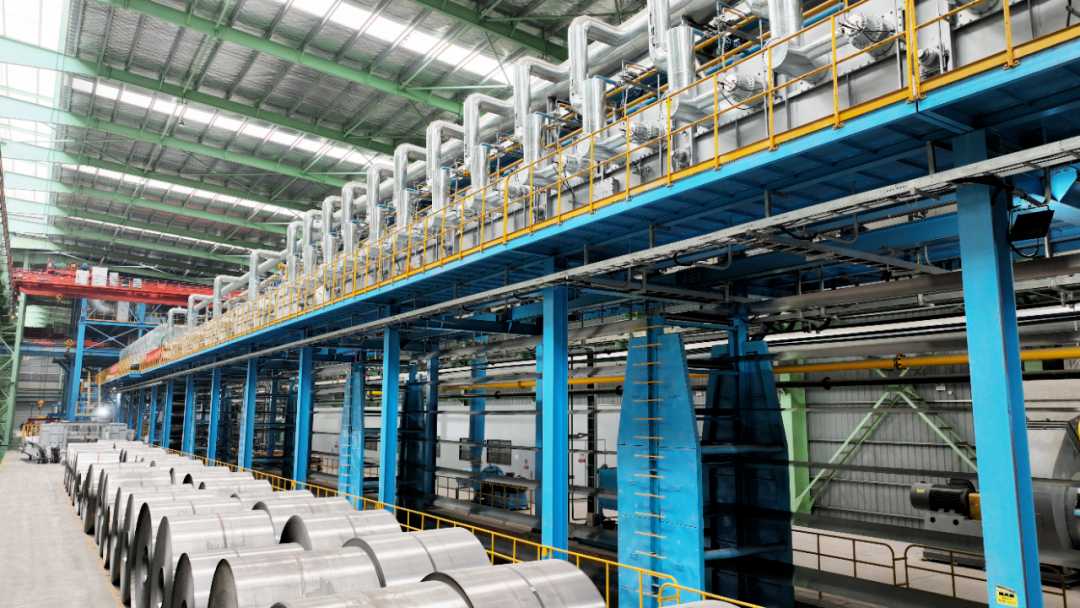
Developed for real-world strip hot-dip galvanizing conditions, RITMAN dual-closed-loop coating control system integrates feedforward pre-control and real-time feedback regulation. Supported by process mechanism models and equipment actuation, it delivers coating thickness output with high accuracy and consistency.
Industry Challenges
Strip hot-dip galvanizing features strong coupling and large time-delay. Multiple interfering factors interact with each other, including strip speed fluctuation, Zn-Al-Mg bath viscosity variation, mismatched air-knife parameters and substrate shape deviation. During coil change and speed ramp-up/down, delayed parameter adjustment readily causes out-of-spec coating on coil heads and tails. Due to unique liquid-phase properties of Zn-Al-Mg alloys, traditional models tend to produce transverse thickness deviation. Relying merely on coating gauges only enables post-hoc correction instead of pre-emptive disturbance suppression. Heavy dependence on manual operator tuning leads to batch-to-batch variation and higher zinc consumption. Stable high-quality coating production calls for a complete control loop of prediction-execution-inspection-self-learning.
Dual-Closed-Loop Coating Control: Synergy of Feedforward and Feedback
Process Feedforward Closed Loop: Pre-judgment and Dynamic Pre-adjustment. Built upon massive process mechanism models, the system collects hundreds of real-time data points such as strip speed, zinc-bath temperature, alloy composition, substrate specification and air-knife status. It completes pre-calculation before disturbances occur. During coil change, speed transition and grade switching, target set-points for air-knife pressure, gap and height are automatically generated to actuate equipment in advance and avoid abrupt coating-weight change at coil heads and tails.
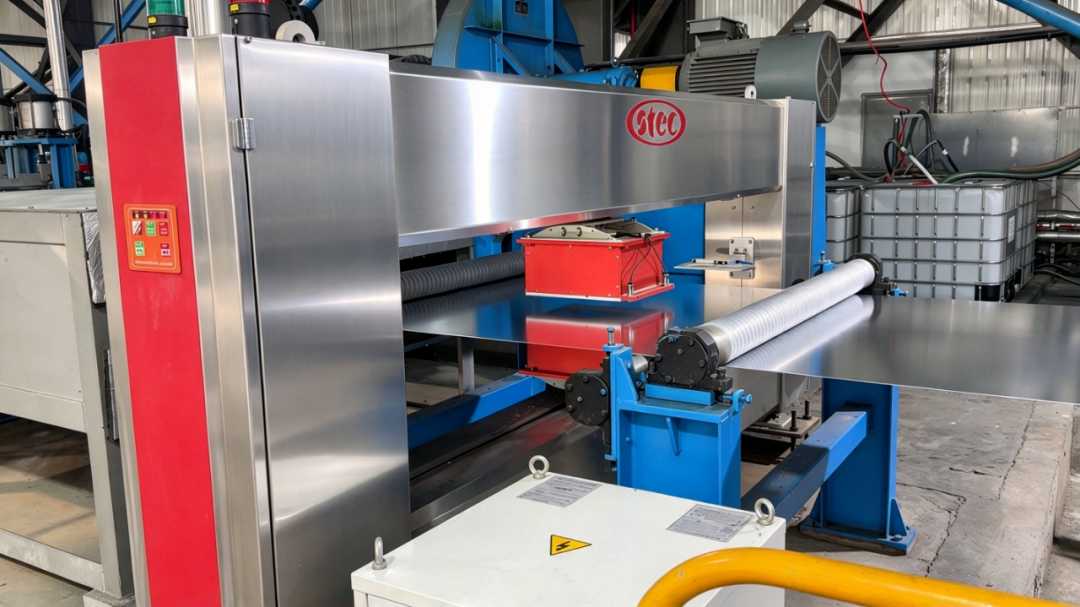
On-line Measurement Feedback Closed Loop: Measured Correction and Continuous Convergence Downstream on-line coating gauges capture transverse and longitudinal coating data, which are fed back for comparison against target coating weight. Minor deviations between model prediction and site conditions trigger real-time fine-tuning of actuators for secondary high-precision correction.
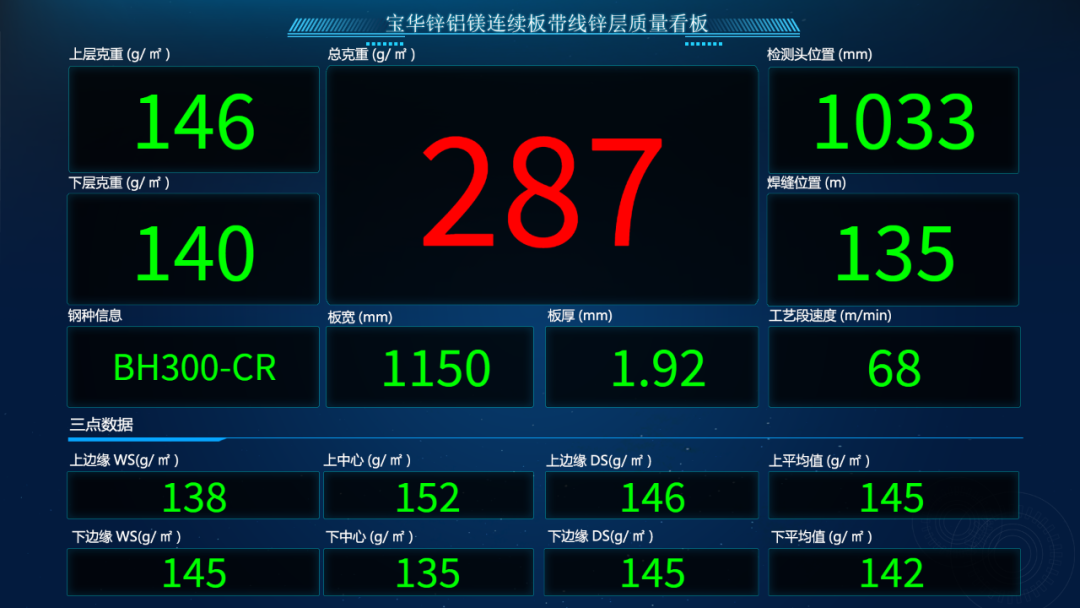
The feedforward loop counteracts large disturbances from speed and grade changes, while the feedback loop delivers fine calibration under steady-state operation. The combination ensures dynamic stability and full-width coating uniformity, supporting conventional galvanizing, Al-Zn-Si and Zn-Al-Mg coating production.
Application Benefits
Improved Quality: Mitigates head-tail tolerance violations and transverse thickness deviation, narrows coating fluctuation to meet strict standards of photovoltaic, home appliance and high-end building materials, supporting high-value order acquisition.
Cost & Material Saving: Enables stable production close to lower specification limits, eliminates material waste caused by conservative “over-coating” practice and cuts alloy consumption per ton of product.
Simplified Operation: Built-in multi-grade process libraries automatically activate corresponding strategies upon product change-over, lowering reliance on operator experience and reducing human-induced quality defects.
Flexible Production: Specially optimized models for physical properties of Zn-Al-Mg alloys allow flexible switching between conventional galvanizing and Zn-Al-Mg production on one single line.
Stable coating performance comes from systematic collaboration among equipment, process, algorithms and onsite data. RITMAN transfers lab-grade process models to industrial production lines, helping manufacturers shift from experience-based production to datadriven manufacturing and build market competitiveness through reliable product quality.